Supporting The Fight

 CALL US NOW
 EMAIL US NOW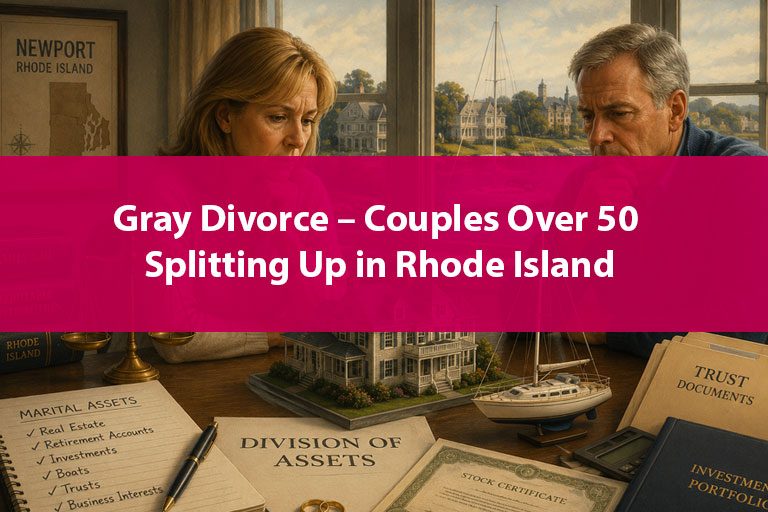
Divorce is no longer primarily something that happens to younger couples. According to researchers at BSGU’s National Center for Family and Marriage Research, 36% of all divorces in the United States now involve people 50 and older—a figure that has grown significantly since 1990, even as overall divorce rates have declined.
Gray divorce in Rhode Island is very much part of this shift. As a Rhode Island family law attorney with over two decades of experience, the Law Offices of Susan T. Perkins, Esq. has helped many clients over 50 work through the emotional weight and legal complexity of ending a long-term marriage.
Keep reading to learn what’s driving gray divorce today, what’s often behind these decisions on a personal level, and what you need to know before taking the next step.
How Economic and Generational Shifts Are Driving Gray Divorce Today
Gray divorce is no longer just a baby boomer story. The oldest members of Generation X are now in their early 60s, all of whom bring their own expectations about marriage, partnership, and what a fulfilling second half of life looks like into the conversation.
Across both generations, a combination of greater financial independence, longer lives, and a shifting cultural landscape has changed the status quo when it comes to staying in an unhappy marriage.
For much of the last century, the financial math of leaving a long marriage—especially for women who had stepped back from careers to raise a family—was overwhelmingly daunting. That’s changed.
Now, many women have built real financial independence throughout their marriages, and the assets accumulated over decades (like home equity, retirement accounts, and investment portfolios) have grown considerably for many Rhode Island families.
Said another way, both spouses now tend to have more of a foundation to stand on than prior generations did.
Lastly, time is a major factor too. If you’re 60 and struggling in a marriage, you may be looking at another 25 to 30 years ahead. That’s a meaningful portion of your life still to come.
Across all of these factors, older adults who go on to build active, fulfilling lives after divorce are increasingly visible in their own communities and on social media, which has made the prospect feel less like a brick wall and more like a door into your future.
The Reasons Why Long Marriages End
Statistics tell us that gray divorce is rising. What they can’t capture is why a specific person, after 35 years of marriage, finally decides it’s time to go.
At the Law Offices of Susan T. Perkins, some of the reasons behind gray divorce that show up again and again include:
- A spouse who wasn’t there when it mattered most. When one spouse faces a serious illness and the other withdraws, the damage is hard to undo.
- Years of endurance reaching a limit. Some marriages involve managing a partner’s addiction, mental health struggles, or long-term emotional absence for decades. Once the kids are grown and moved out, there’s no reason to stay.
- Growing in different directions. When parenting is no longer the shared project that holds a couple together, some find they don’t have as much in common as they thought.
For a broader look at what can drive these divorces, see our guide to the gray divorce trend.
What Makes Gray Divorce in Rhode Island Legally and Financially Complex
The emotional decision to leave is in and of itself a major, difficult choice. The next step, which is the process of legally and financially untangling a decades-long marriage, is often just as complicated.
You see, Rhode Island is an equitable distribution state, which means marital assets are divided fairly, not automatically split down the middle.
A family court judge considers factors including the length of the marriage, each spouse’s financial and non-financial contributions, current and future earning capacity, and the economic circumstances of each party going forward.
In a gray divorce, the division of assets tends to look quite different from what a younger couple navigates. Common items on the table include:
- Home equity and shared real estate
- Investment and brokerage accounts
- 401(k)s, IRAs, and other retirement accounts
- Pensions (which require a Qualified Domestic Relations Order, or QDRO, to divide properly)
- Long-term spousal support, particularly when one spouse stepped back from a career during the marriage
Each of these carries serious complexity, and errors made during this phase can be both costly and difficult to reverse.
For couples with substantial accumulated wealth, the process is even more involved, which is why many gray divorce clients benefit from working with an attorney experienced in high-net-worth divorce in Rhode Island.
Ultimately, at this stage of life, there is less runway to financially recover from a misstep, which makes getting it right the first time all the more important.
Thinking About Divorce in Rhode Island? You Don’t Have to Figure It Out Alone
Deciding to end a long-term marriage is one of the most significant choices a person can make—and one that will impact almost every facet of your life, including your finances, emotions, and other relationships. This is why it’s crucial to remember that you don’t have to figure it out alone.
Susan T. Perkins has spent over two decades helping Rhode Islanders through the complexities of divorce at every stage of life. If you’re considering gray divorce in Rhode Island and aren’t sure where to begin, taking time to prepare and think through your options can make the process significantly less chaotic.
Contact our office today or call (401) 324-2990 to schedule your free 60-minute consultation. The sooner you get in touch, the sooner you’ll have a clear picture of the paths available to you.
Frequently Asked Questions About Gray Divorce in Rhode Island
What is gray divorce?
Gray divorce refers to divorce among adults 50 and older. According to AARP, the divorce rate among adults 50 and older has doubled since 1990, even as overall U.S. rates have declined.
Ending a long marriage later in life comes with its own complexity, hence the creation of the term “gray divorce.” For example, more assets have accumulated over the years, recovery timelines are shorter, and considerations like retirement accounts, pensions, and long-term alimony often take center stage.
How is property divided in a divorce after 50?
Rhode Island follows an equitable distribution standard under R.I. Gen. Laws § 15-5-16.1, meaning marital property is divided fairly based on the circumstances of the marriage, not automatically split 50/50. Courts weigh several factors, including:
- Length of the marriage
- Current and future earning capacity of each party
- The overall economic circumstances of both spouses
- Each spouse’s financial and non-financial contributions
Retirement accounts such as 401(k)s and pensions require a Qualified Domestic Relations Order (QDRO) to divide properly and avoid tax penalties. Given the complexity involved, legal guidance during this stage is essential.
Do I need a lawyer for a gray divorce?
Legal representation isn’t required, but it is strongly advisable—particularly when retirement accounts, real estate, pensions, or long-term spousal support are part of the picture. You see, errors made during asset division in a gray divorce can be expensive and difficult to undo, especially when there are fewer working years ahead to recover.
If you’re weighing your options, the Law Offices of Susan T. Perkins offer a free 60-minute consultation so you can understand where you stand before making any decisions. Reach out here to schedule yours.